A comic goldmine becomes a traffic jam of characters
Not all movies ought to be dignified with a review. Yet here we are.... reviewing Welcome to the Jungle.
Boney Kapoor On 43 Years Of Woh Saat Din Boney, your Woh Saath Din turned your fortunes completely.




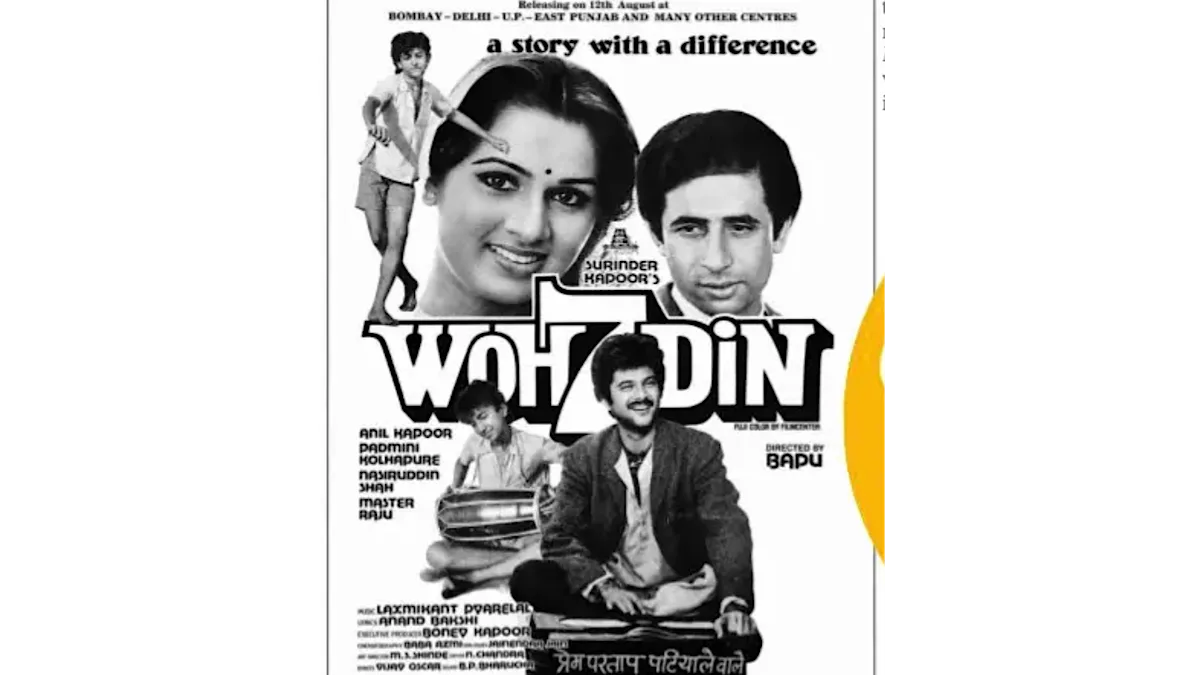
Photo:SNS
Boney Kapoor On 43 Years Of Woh Saat Din Boney, your Woh Saath Din turned your fortunes completely. How did your director Bapu and you come together? See, basically after doing Hum Paach with Bapu, we struck a very good bond. And I used to visit Chennai because I wanted to make my next film also with Bapu. So I used to visit Chennai and we used to work on ideas, we used to discuss ideas, what to do, what not to do. We struck on an idea to make a love story.
But somehow it could not develop into a script which could be put on screen. It didn’t really excite us after we worked hard on it. We worked for a couple of months. In fact I had accompanied Bapu even to Hyderabad while he was shooting one of his films there. Me, my writer, Bapu …But it didn’t work out. During my following visits to Chennai, Bapu had offered a film to be done in Telugu by a Telugu producer. And that happened to be a remake of the 1981 Tamil film Andha 7 Naatkal directed by K. BhagyarajBapu asked me to accompany him to see 12, 14th reels of Andha 7 Naatkal. They still had some work to be done. But they were ready to give the rights to make it in Telugu. Just come and have a look. At that point of time, I never thought I was going to watch a film and make it in Hindu. The only intention was that I accompany him and watch the film.
Advertisement
When I watched the film, I got too excited. I told Bapu, it’s a fantastic film. You must do it in Telugu. He started working on the Telugu version. And I couldn’t get over this film. I just wanted to buy the film for Hindi rights. I approached the producer. The producer was not ready to give the Hindi rights. Because apparently, the director Bhagyaraj’s film Ek Hi Bhool with Jeetendra and Rekha had become a big hit. So he probably was waiting for better prospects. But I convinced Bhagyaraj to let me remake Andha Saat Naatkal in Hindi. You were lucky to work with Bapu in Hum Paanch and then WohSaat Din? Bapu has inspired, in that era, Bharati Raja, who just passed away.
Advertisement
And Mani Ratnam, you know, all because basically he was an artist.They all belonged to his school, Bapu’s school of thought. Bapu’s school, yeah. Framing, compositions, all those things, simplicity, all those things. No makeup, left it as realistic as possible. Bapu’s fan was Satyajit Ray. Bapu had made the film Sita Kalyanam in 1976 for 13 lakhsIt had Jaya Pada. And I think it is after this that Satyajit Ray had said she’s the most beautiful woman he has ever seen. Satyajit Ray was enamored by that film. And Mrinal Sen was a very big fan.And he had used only one set multiple times with different, different angles and shot different areas of the palace. Genius! Coming back to Woh Saat Din, was it an expensive film for you?
No, it was not an expensive film. I mean, in fact, thanks to that film, I made enough profit from it. I got my sister married with the money that I made in that film. My sister’s marriage was done the way it was done. This film was a prospective profit. I mean, it had not been released. The buzz was there and the margin was there. So, obviously, those days we spent money more than what we could afford. We spent almost 10 lakhs on promotion. Those days, films never used to release simultaneously all over the country. I had taken a print to sell in Bengal to show the distributors there. Delhi was also sold. This is a weird story.
Tell me? I was very keen on the film’s release in particular theatres all over the country. Padmini Kolhapure, was she your first choice? Padmini, yes. Because she was the star of the film. When we signed her, she was not that big a star.We signed her because, okay, she was an upcoming actor, but we got wind that Raj Kapoor was going to sign her for Prem Rog. So I went and signed her. At that time, she was doing a film for Mohan Kumar, Nassir Hussain, Raj Kapoor. She was quite in demand, I remember. So somehow, we managed, I mean, we signed her and she also was excited by the subject.
She liked the subject.And if you see Woh Saat Din, she looked very pretty. Okay, what about Naseeruddin Shah? Naseer, initially, didn’t want to do the picture. And it took a while for me to chase him and pin him down. I said, why are you ignoring my call? Why don’t you want to do it? He said, I don’t want to get stuck into this Bade Bhai syndrome. In fact, my director, Bapu, at one time had insisted, let us take Shashi Kapoor. But I didn’t want Shashi. I wanted a sober face. And, you know, I didn’t want to project another hero. When I’m launching Anil in a film, how can I have another major hero? I thought Naseer would be most appropriate for that role.
And imagine the day I landed in Naseer, he finally, you know; he told me, okay, Boney, let me think. And finally on the day he was supposed to let me know yes or no, I landed up at his house. I thought if I wait for him to call me, or maybe his manager will come and give me some shit. So I landed up at his house. He was sitting on a writing desk, writing a letter to me on why he won’t do the film. I said, nothing doing, Naseer, you can’t escape this. And our relation was such, you know, those days buying a Fiat car was impossible. He wanted to give one car to Ratna. I helped him get that.I had a great bond with him, a great, great bond with him.
We still are very, whenever we meet, there’s a lot of warmth. Although we don’t meet very often, but there’s a lot of warmth. You spent a lot of your money in promoting Woh Saat Din? I had hoardings put up in Bombay. Some hoardings were put up by distributors because of what the film would afford. Some we had added on. The hoarding in Haji Ali used to be very expensive. We had put up 20-25 hoardings before the Delhi release. And we had booked every newspaper front page for a quarter page ad for 7 days. Where do you place Woh Saat Din among your productions? It will remain one of my most favourite films. Raj Kapoor had praised Anil a lot. Everybody, whoever saw the film, they liked Padmini, they liked the film, and they liked the casting.
The art director appreciated it because I had made a house set on the RK Studios floor. For the first time, I made an indoor glass house. Everybody thought I had shot in a real bungalow. The set was made by M.S. Shinde but Bijon Dasgupta propped up the set. Baba Azmi was the cameraman. Baba and Bijon were a good team. They are still very good friends. Baba and Bapu were a fantastic team. And every location in the film, I wanted a view of the city; otherwise it would remain just an indoor film. That’s why I put up a glass house just to get the feel of that.
If you remade Woh Saat Din, whom would you cast? Janhvi could do Padmini’s role. For Naseer’s role someone like Siddharth Malhotra and for Anil’s role, Ranbir Kapoor. Fond memories of Woh Saat Din? Sanjay Leela Bhansali’s Hum… Dil Chuke Sanam was inspired by Woh Saat Din.The original director and the actor of the film K. Bhagyaraj . He said what I could not do what Anil has done. And then after that, Bhagyaraj and I also shared a bond. We made Mohabbat also, which was again a remake of his picture. Beta also was again a remake of Bhagyaraj picture. You’ve had quite a career as a producer? I have been around 53-54 years. I started working at the age of 16-17, as an assistant editor, then assistant director, then assistant producer, then producer.
I think it’s quite a journey. Star Female Producers Making It Happen For Themselves It’s not only Samantha in Maa Inti Bangaaran. More and more female actors are turning into producers to make films that justify their presence. Anushka Sharma, Alia Bhatt, Priyanka Chopra, Deepika Padukone, and Kriti Sanon are among the most prominent Bollywood actresses who have successfully transitioned into film production to champion unique content and female-driven narratives. Moving behind the camera allows these leading ladies to command creative control, back unconventional scripts, and pave the way for fresh talent in a traditionally male-dominated domain.
Anushka Sharma (Clean Slate Filmz) co -founded her production house at the age of 25 alongside her brother Karnesh Sharma, producing critically acclaimed, gritty thrillers and supernatural films like NH10, Pari and Bulbbul. Alia Bhatt (Eternal Sunshine Productions) launched her production company to focus on supporting distinct, diverse storytelling and fresh narratives. Made her debut as a creative producer with the widely praised Netflix dark comedy Darlings one of her most acclaimed films where she played an abused wife who plots to kill her husband.
Priyanka Chopra Jonas (Purple Pebble Pictures) founded her production banner in 2015 with a strong initial focus on promoting regional Indian cinema. Expanded her reach to co-produce global and Hindi projects, including the emotional drama The Sky Is Pink. Deepika Padukone (Ka Productions) established her banner in 2018 to invest in impactful stories that merge mainstream entertainment with powerful social messaging. Debuted as a producer with Meghna Gulzar’s Chhapaak, a biography about acid attack survivor Laxmi Agarwal. Co-produced the historical sports drama 83 and developed the official Hindi adaptation of Hollywood’s The Intern. Kriti Sanon (Blue Butterfly Films) stepped into film production to tell compelling, high-quality, and deeply engaging stories. Made her launch venture with the mystery thriller Do Patti, sharing the screen space with Kajol.
Kangana Ranaut (Manikarnika Films) launched her studio to back independent narratives, debuting with the streaming film Tiku Weds Sheru. Taapsee Pannu (Outsiders Films) produced the multi-generational female buddy film Dhak Dhak, which centered on women embarking on a transformative motorcycle trip. Kareena Kapoor Khan marked her production entry by co-producing the atmospheric thriller The Buckingham Murders directed by Hansal Mehta. Twinkle Khanna (Mrs Funnybones Movies) shifted completely from acting to writing and production, backing the socially conscious hit film Padman. Dia Mirza (Born Free Entertainment) turned producer to back independent projects, most notably pushing the female-led comedy-drama Bobby Jasoos.
THE WRITER IS A RENOWNED FILM CRITIC.
Advertisement